prop firm evaluation strategies

Propchallange 10

Prop Firm Strategy & Comparison Hub

Pass Your Prop Firm Challenge & Scale Funded Accounts

Master Smart Money Concepts, compare leading proprietary trading firms, and utilize data-driven risk management frameworks to navigate evaluation challenges.

✓ Objective Firm Parameters
✓ Advanced SMC & Price Action
✓ Professional Risk Frameworks

Engineered for evaluation rules & risk models at

FTMO FundingPips FundedNext The5ers LUCIDTRADING ALPHA CAPITAL

“Welcome to PropChallenge10, your ultimate guide for prop firm evaluation strategies, risk management, and funded trading success.”

FTMO.com - For serious traders

Ready to Pass Your Next Prop Challenge?

Compare top-tier proprietary trading firms, analyze evaluation rules, and secure your funded account today.

Compare Prop Firms Now

Top Proprietary Trading Firms Comparison

Compare evaluation structures, platforms, and features to choose the right firm for your trading style.

Prop Firm Profit Split Drawdown Model Platforms Key Highlights Action
FTMO Industry Standard Up to 90% Static / Daily Max Limit MT5, cTrader, DXtrade High reliability, fast payouts, excellent reputation Read Review
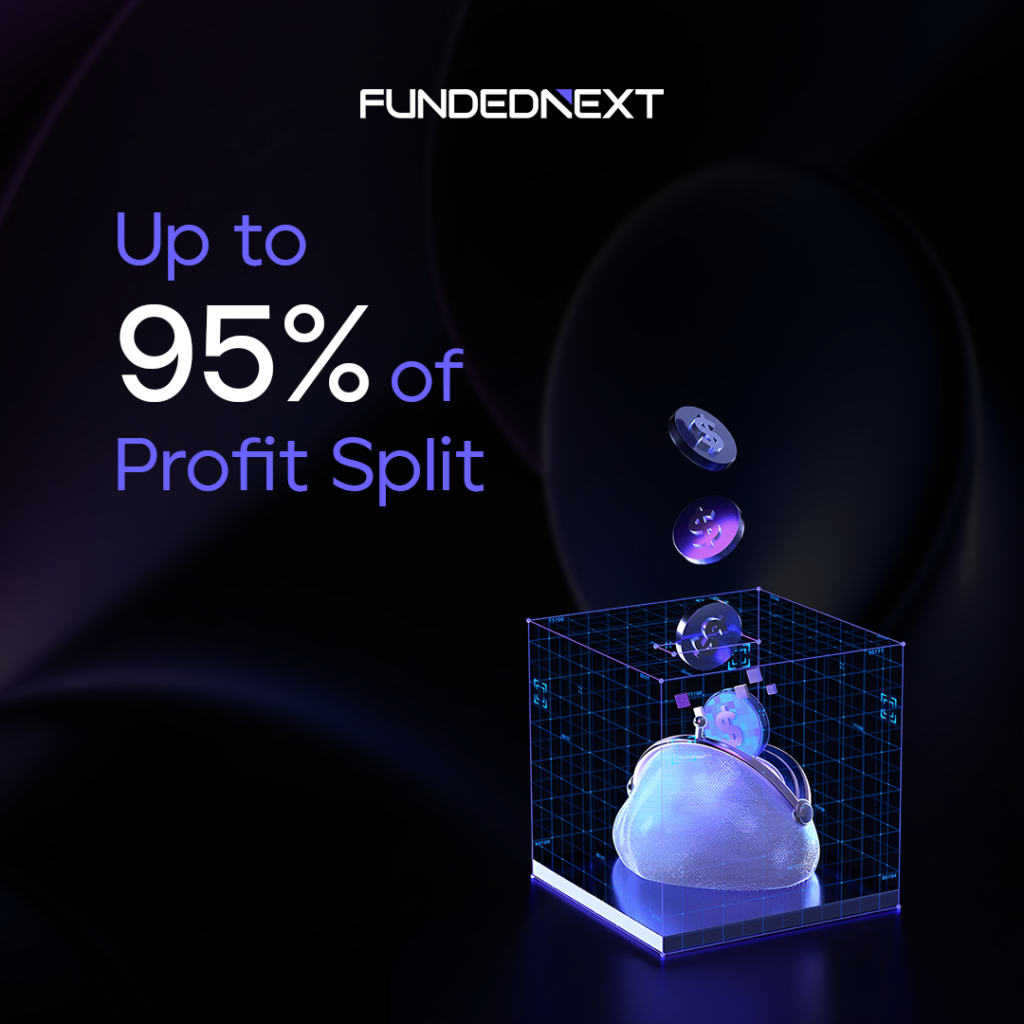
FundedNext No Time Limits Up to 90% Balance & Equity Based MT4, MT5, cTrader 15% profit share during challenge, low commission rates Read Review

How to Master Prop Firm Evaluation Challenges

Build a sustainable edge with data-driven frameworks, strict risk parameters, and objective firm comparisons.

📊

Data-Driven Trading Strategies

Learn how to apply Smart Money Concepts (SMC) and price action rules to pass 1-step and 2-step evaluation challenges with precision and consistency.

⚖️

Objective Firm Comparison

Compare profit split terms, trailing vs. static drawdown rules, and minimum trading days across top-rated proprietary trading firms.

🛡️

Professional Risk Frameworks

Protect your funded capital using strict daily loss limits, optimal position sizing, and robust drawdown management protocols.

Comprehensive Prop Firm & Trading Knowledge Base

Explore 40 expert answers covering evaluation rules, risk frameworks, trading strategies, and funded account management.
📁 1. Prop Firm Fundamentals & Basics
1. What is a proprietary trading firm (prop firm)? +
A prop firm provides traders with simulated capital to trade financial markets. In exchange, the firm shares a high percentage of profits (80%-90%) with the trader while absorbing the downside financial risk.
2. How do prop firm evaluation challenges work? +
Challenges test your trading skills under strict risk parameters. You trade a demo account with profit targets and loss limits; passing grants you funded account status.
3. What is the difference between 1-step and 2-step challenges? +
A 1-step challenge requires passing a single evaluation phase. A 2-step challenge involves an initial phase followed by a verification phase with a lower profit target.
4. Are prop trading firms legal and regulated? +
Prop firms operate as simulation and educational providers rather than traditional retail brokers, partnering with institutional liquidity providers for execution environments.
5. What assets can I trade through prop firms? +
Depending on the firm, you can trade Index Futures (ES/NQ), Forex currency pairs, commodities, cryptocurrencies, and global stock indices.
6. What trading platforms do prop firms support? +
Popular platforms include Quantower, MetaTrader 5 (MT5), cTrader, DXtrade, and TradingView integrations for advanced technical analysis.
7. Why do retail traders use prop firms instead of personal capital? +
Prop firms allow traders to leverage substantial capital amounts (e.g., $50k to $200k+) while risking only a small evaluation fee instead of personal life savings.
8. Are there time limits to pass evaluation challenges? +
Many modern firms offer "no time limit" models, removing deadline pressure so traders can wait for high-probability market setups.
9. What is a simulated funded account (Demo Funded)? +
An account where you trade simulated funds with real profit split payouts, allowing firms to manage regulatory and capital exposure safely.
10. How do prop firms make money? +
Firms generate revenue primarily from evaluation fee sales and from keeping a percentage of the losing trades or failed challenge attempts.
📁 2. Evaluation Rules & Drawdown Models
11. What is a maximum daily drawdown limit? +
The maximum amount your account equity or balance is allowed to drop in a single trading day before breaching the account.
12. What is the difference between static and trailing drawdown? +
Static drawdown stays fixed at your initial balance. Trailing drawdown moves upward dynamically as your account balance or equity grows.
13. How is daily drawdown calculated (Equity vs. Balance)? +
Equity-based daily loss counts open floating positions, while balance-based calculations only look at closed trades at midnight server time.
14. What happens if I breach a drawdown limit? +
Your evaluation or funded account is automatically locked and suspended by the risk management server software.
15. Are there minimum trading days requirements? +
Some firms require you to trade a minimum number of days (e.g., 3 to 5 days) during an evaluation to prove consistent strategy execution.
16. Can I hold trades over the weekend? +
Weekend holding rules vary. Futures firms usually require flat positions before market close, while some forex firms permit weekend holding.
17. Do prop firms allow news trading during high-impact releases? +
Policies differ: some restrict opening trades 2 minutes before/after major news, while others allow complete news trading freedom.
18. What is consistency rule in prop evaluations? +
A rule ensuring a single lucky trade doesn't account for the entire profit target, usually capping a single day's profit percentage.
19. What is max total drawdown? +
The absolute ceiling limit your account can fall from its starting baseline before permanent account failure.
20. Can I reset my failed evaluation account? +
Yes, most firms offer discounted or standard reset options to start a new evaluation immediately after a breach.
📁 3. Trading Strategies & Risk Management
21. Can I use Smart Money Concepts (SMC) on prop accounts? +
Yes, order blocks, liquidity sweeps, and fair value gaps (FVG) are fully permitted and widely used by successful funded traders.
22. What is the optimal risk-to-reward ratio for challenges? +
A ratio between 1:2 and 1:3 is optimal, balancing win rate with sufficient profit payoff to cover minor losing streaks.
23. How much capital should I risk per trade? +
Professional traders typically risk between 0.5% and 1% per trade to safeguard against daily drawdown violations.
24. Are automated Expert Advisors (EAs) allowed? +
Custom EAs and trade copiers are generally allowed, provided they are your own strategy logic and not prohibited HFT bots.
25. What is index futures scalping on ES and NQ? +
Trading E-mini S&P 500 or Nasdaq futures intraday using order flow, volume profiles, and key support/resistance levels.
26. How do I avoid emotional revenge trading? +
Implement a strict daily stop-loss rule: once 2 consecutive losses occur, close the platform and step away for the day.
27. Is swing trading permitted on prop firm evaluations? +
Yes, specific swing accounts allow holding positions overnight and through weekends without intraday liquidation.
28. What is position sizing and why is it crucial? +
Calculating lot sizes based on stop-loss distance ensures a single trade never exceeds your risk parameters.
29. Can I trade multiple accounts using a trade copier? +
Yes, tools like Duplikium or built-in Quantower copiers let you execute trades across multiple prop firm evaluations simultaneously.
30. How do I build a repeatable trading edge? +
Backtest historical data, log your execution metrics in a journal, and refine your entries based on statistical expectancy.
📁 4. Payouts, Scaling & Account Management
31. How do profit split payouts work? +
Profits earned on funded accounts are split between you and the firm (typically 80/20 to 90/10) and paid out via bank transfer or crypto.
32. What is a scaling plan for funded accounts? +
A mechanism allowing consistent profitable traders to increase their account allocation size periodically (e.g., by 25%-50%).
33. How often can I request withdrawals? +
Most top-tier prop firms offer bi-weekly or monthly payout cycles once the minimum profit threshold is met.
34. Do prop firms withhold taxes on payouts? +
No, traders operate as independent contractors or business entities and are personally responsible for reporting local income taxes.
35. What happens if a prop firm goes out of business? +
Because accounts are simulated, choosing established, reputable firms with strong financial reserves minimizes counterparty risk.
36. Can I upgrade my account size after passing? +
Yes, through organic scaling plans or by purchasing additional evaluation accounts and merging them where permitted.
37. What is KYC verification in prop trading? +
Know Your Customer identity checks (passport/ID and utility bill) required before receiving your first real profit payout.
38. Are there refund policies for evaluation fees? +
Many firms refund your initial evaluation fee along with your first or second successful funded account profit split payout.
39. How do I choose the best prop firm? +
Evaluate firms based on payout reliability, transparent drawdown rules, platform quality, and community reputation over high splits.
40. Can I manage multiple funded accounts simultaneously? +
Yes, subject to the prop firm's total capital allocation cap per individual trader across their entire ecosystem.

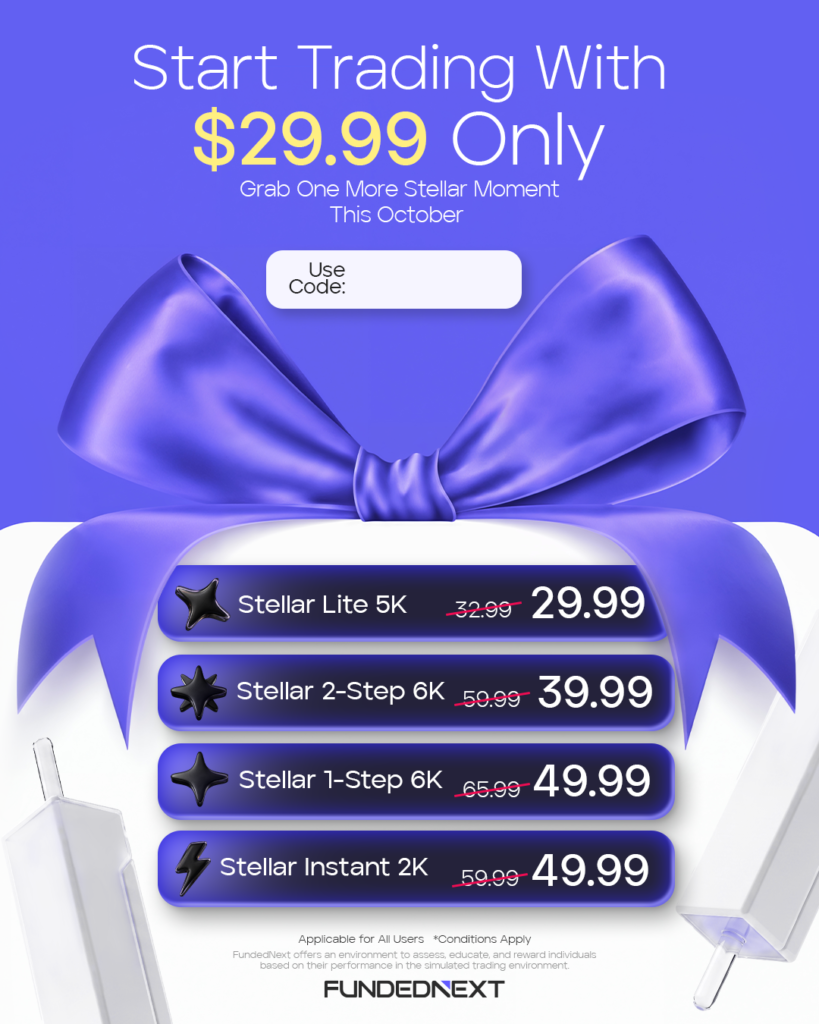
Looking to pass your next prop firm challenge? Take advantage of the special October promotion from FundedNext. Get started with evaluation accounts starting as low as $29.99. Make sure to apply our exclusive discount code FAN at checkout to claim your savings and activate your affiliate tracking.